
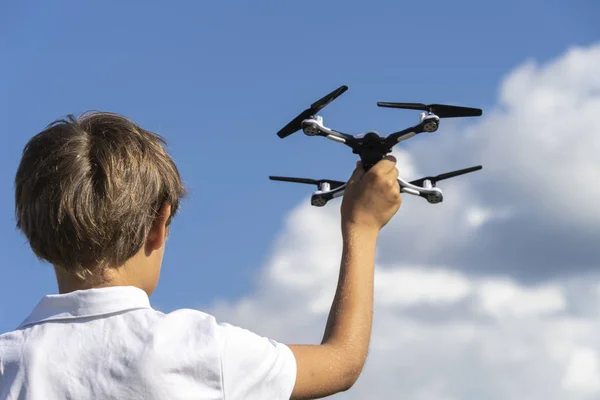
Children like to look at the sky. Especially when something is flying in it: a bird, a cloud, or… a drone. In 2025, the word “drone” no longer surprises anyone. Some have them at home as toys, some see them in parks, some even dream of becoming drone operators.
But there’s one important thing that we, adults, sometimes forget: not every drone is safe entertainment. And not every child knows how a drone can be dangerous. That’s why we wrote this article. Not to frighten. But to teach how to notice threats and act correctly.
What Types of Drones Exist and How They Differ
When we say “drone,” we mean many different devices. The technically correct name is UAV (unmanned aerial vehicle). They come in various types:
- Household (toy) drones: lightweight, battery-powered, often without cameras or with very limited range.
- Commercial drones: used for video shooting, monitoring, logistics. Larger, more complex, more powerful.
- Military drones: created for surveillance, targeting, hitting targets. Among them are reconnaissance UAVs, kamikaze drones, and FPV drones that “fly through the eyes” of the operator.
And importantly, they can look very similar from the outside. That’s why you shouldn’t take any flying object lightly, especially in the sky above educational institutions or residential areas.
Dangers That Aren’t Visible from the Ground
Unfortunately, a drone is not just a “small helicopter with a camera.” It’s a device that may look safe but pose a real threat, especially under martial law conditions.
- Transmission of Object Coordinates
Even if a drone is not armed, it can transmit the exact location of schools, shelters, gatherings of people or equipment. In wartime conditions, this is direct assistance to the enemy, even if the operator acts “accidentally.” - Recording Video from Sensitive Zones
Playgrounds, schools, yards where children play — all this can be filmed without the consent of parents or administration. Videos with geolocation or familiar faces easily end up on the network, where they can be used by criminals, intelligence agents, or cyberbullies. - Monitoring Children Without Their Knowledge
Drones can “hover” over children’s areas for hours. This is psychologically pressuring — a child may not always admit it, but feels in danger. Constant “observation from above” can cause anxiety, withdrawal, and even fear of going outside. - Physical Damage
Drone propellers are fast and sharp. When falling, they can seriously injure a child, especially if their reaction is to touch or pick up the “toy.” There have been cases of cuts to the face, fingers, eyes even from the smallest models. - Modified Drones
In frontline regions, drones appear with suspended elements — from cameras to homemade explosive devices. A child cannot tell the difference. And even touching an “interesting box” can have irreparable consequences.
UAVs are not only innovative technology but also carriers of risk, especially for children who are usually attracted to anything that moves, blinks, and flies. The task of adults is not to create fear, but to provide knowledge. Because the greatest danger is indifference and ignorance. If a child can recognize risk, they are already protected one step more than most adults.
How to Explain to a Child That Not All Drones Are “Cool”
“You’re not obligated to fear a drone, but you are obligated to be attentive.” — this is how you can start a conversation with a child.
Explanations for children 5-9 years old:
“This is a flying device. People launch it. Sometimes — to play. Sometimes — for dangerous things. If you see a drone over school or very close, it’s better to tell adults or a teacher. We’ll look together to see if everything is alright.”
For older children:
“Most drones are just technology. But in our time, drones can transmit information or even attack. You don’t have to be afraid of this, but you should know: if you see a drone flying low, in a strange place, or at a suspicious time — don’t ignore it.”
What Should a Child Do If a Drone Hovers Nearby
- Don’t come closer. Even if curious. Even if it “fell beautifully.”
- Don’t film it on your phone. This can reveal your location or put the operator at risk.
- Don’t try to touch it or take it in your hands. If a drone has landed, it may be dangerous or broken.
- Inform adults or a teacher. It’s better to take an extra step than to not take a necessary one.
Advice for Parents and Teachers
If you see a drone over a school, kindergarten, or playground — don’t ignore it. It’s not “just kids launching it.”
Explain to children that not everything that “looks like a toy” is safe.
If drone fragments are found on the grounds — don’t touch them. Report to appropriate services or administration.
Hold a conversation. Without fear. Without intimidation. Simply and clearly.
UAVs and Civil Protection — Also a Child’s Business
Civil protection in Ukraine covers not just adults. Children are also participants. They need to know how to behave when an alarm sounds or when an unknown object flies nearby.
The main task of parents is not to frighten, but to teach orientation in the modern world. Because the world has changed. And with it — our safety rules.
Drones Around — Toys, Tools, Threats. But We Shape How Our Children Will Perceive Them
Drones are not evil. They are technology. And like any technology, they can be either a tool for development or a weapon. In civilian hands — it’s footage from above, interesting videos, landscape research. In enemy hands — it’s reconnaissance, fire correction, attack.
A child doesn’t know this. They see “something beautiful in the sky.” They want to film it, approach it, touch it. And our task is not to break their curiosity, but to give them safety boundaries. Because the world is changing. Because the air is no longer just clouds and birds. Because even in the yard nearby, something may appear that looks like a toy but isn’t.
A modern child should know what a UAV is. Just as we knew in childhood that we shouldn’t touch wires, matches, or gas stoves. This is new household safety. Without excessive drama, without shocking stories. Simply: “A drone is not always for entertainment. And your attentiveness is your protection.”
Civil protection is not just about sirens and shelters. It’s about a culture of behavior. About knowledge that is passed on in the family, at school, in clubs. About a child who isn’t afraid, but understands. About a teenager who doesn’t film a Shahed on their phone, but leads younger ones to shelter.
We cannot choose the time in which we live. But we can make it understandable, safe, and predictable for our children. And a drone in this world is not the main threat. The main threat is the indifference of adults. And the main protection is our attentiveness, dialogue, and simple: “I’ll explain to you how this works. And you will know what to do.”