
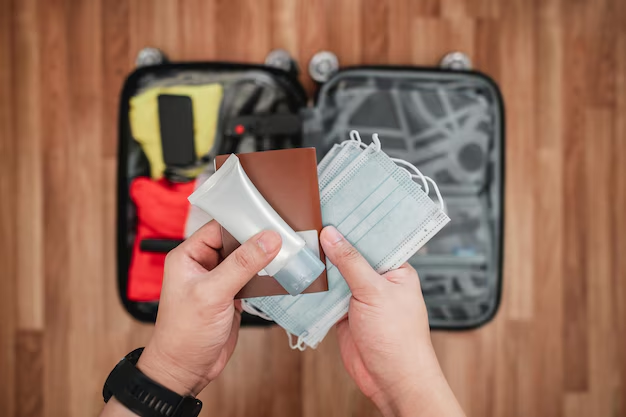
In 2026, it helps to have an emergency kit you can lift with one hand, grab quickly, and keep ready without much effort. This article walks you through a go-bag for common scenarios: staying at home, going to a shelter, and evacuating. You’ll find a complete checklist, short explanations, and a set of items people often remember at the last moment.
Why you need a go-bag in 2026 and how to avoid packing too much
A go-bag is a запас of essentials for the first hours and the first few days when everyday services work inconsistently. It’s easiest to think of it as a 72-hour kit: the first three days are usually when routines break and basic needs require simple, reliable solutions. Your bag should work in three situations: when you stay at home, when you move to a shelter, and when you need to leave quickly. Across all scenarios, the logic stays the same: documents, communication, power, first aid, water, warmth, and basic hygiene.
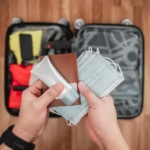
Choose the bag format that fits your reality. A backpack works well if walking is likely. A duffel bag suits a car and home storage. A suitcase can be practical when you expect smooth surfaces and short distances. In any case, the kit should be easy to lift and the essentials should be easy to reach.
Three rules make an emergency kit practical. Keep duplicates to a minimum and add a second item only where it clearly helps—documents, power, and light are typical examples. Make critical items easy to access: keep documents, first aid, a flashlight, and a power bank at the top or in a separate pocket. Update the kit regularly: a monthly check takes 5–10 minutes and reduces most common risks.
What your go-bag should include in 2026
Below is a category-based list. It helps you pack step by step and check the condition of items quickly. Add only what matches your situation.
- Start with documents. Keep the originals you actually need right now, plus copies that help you restore access to services if something gets lost. Store paper copies in a single folder, and keep digital copies on your phone or on storage you truly use. Put everything into a waterproof pouch and add a short list of important contacts on paper. For money, a mix of cards and small-denomination cash works well when payment terminals are unreliable.
- Next comes communication and power. In 2026, this category often determines whether you can get updates, call for help, and stay in touch. Keep your power bank, cables, and chargers in one small pouch so you don’t have to dig through pockets. Choose a flashlight that feels comfortable in your hand or can be worn on your head. If you have space, include spare batteries or an alternative charging option. Download offline maps in advance. A compact extension cord can be surprisingly useful—it lets several people charge devices when only one outlet is available.
- Your first-aid kit should feel simple and clear. The core includes your personal medications with a few days’ supply, plus basic items for minor injuries: bandages, antiseptic, and gloves. A short instruction note helps, especially when the kit is for a family. The most common issue is expired items, so checking dates regularly matters.
- Water and food support you in the first hours and days. Water can be in bottles, and food should be compact and shelf-stable. Snacks that are easy to open and eat without cooking work best. Aim for a reasonable balance: enough to get through the initial period, without turning the bag into a heavy load.
- Warmth and clothing often shape comfort in a shelter and on the move. A thermal blanket takes little space and provides real value. Add spare underwear, socks, and one warm layer suitable for the season. A rain poncho is a reliable all-purpose item, especially during travel. Seasonal updates matter in 2026, because the kit should stay relevant.
- Hygiene supports wellbeing and basic comfort. Wipes, hand sanitizer, a minimal dental kit, and small bags solve most situations. Bags help with organization and protect items from moisture.
- Tools and small essentials help with everyday tasks. Tape, a short cord, a lighter, and a notebook with a pen are useful for fixing, labeling, sealing, and taking notes. If you drive often, a car charger can belong in this category.
It’s also worth mentioning the items people forget. A spare set of keys in a small case, adapters for your chargers, an extension cord, a marker, and a few zip bags in different sizes add convenience without taking much space. A “pocket mini-kit” works well too: a keychain flashlight, a small power bank, a copy of your documents, and a bit of cash. It can help even when your main bag stays at home.
How to adapt your emergency kit to your situation
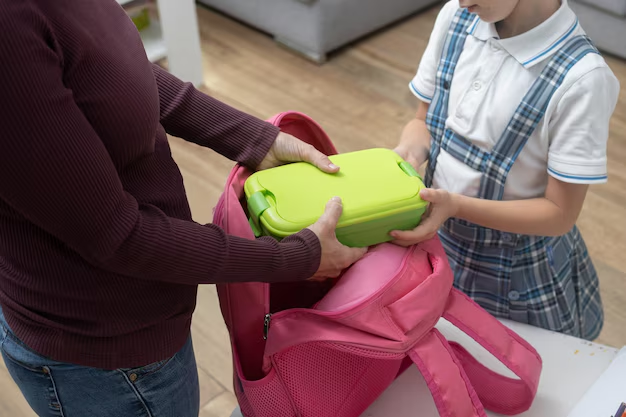
If you have children, add items that support routine and basic needs: water, a familiar snack, age-appropriate hygiene items, and a small activity item. For people with chronic conditions, it’s important to have a medication reserve and a simple note with dosages and the doctor’s contacts. For pets, a separate pouch works best: food, water, a bowl, walking items, and a copy of veterinary documents.
A car kit is best kept as an extra “layer.” It doesn’t replace your go-bag, but it supports autonomy on the road: a flashlight, water, a warm blanket, a basic first-aid kit, and a jump starter.
Keeping your kit ready: a monthly check
Once a month, check the charge level of power banks and flashlights, expiration dates in first aid and food supplies, and seasonal items. It also helps to quickly review waterproof protection for documents and the condition of packaging. When the kit is stored in an easy-to-reach place and has a clear structure, this check takes only a few minutes.
Family coordination helps as well. It’s useful when everyone knows where the bag is, who takes documents, who handles first aid, and who is responsible for power and light.
Quick checklist before you leave
Before you go, run a short check:
- Documents + copies + cash
- Phone + charge + power bank + cables
- Flashlight + batteries/charge
- First aid + personal medications
- Water + snack
- Thermal blanket + warm layer
- Hygiene + bags
- Keys, extension cord, adapters
- Separate pouch for kids/medical needs/pets (if needed)
How to make your go-bag workable in 2026
A simple approach tends to work best: pack the essentials—documents, communication, power, first aid, water, and warmth—then add items for your situation. After that, your job is maintenance: recharge power, refresh first-aid supplies, and update seasonal items. This keeps your go-bag up to date and easy to use in 2026.